
A Trusted Leader in Emissions Control Technology
Project Overview
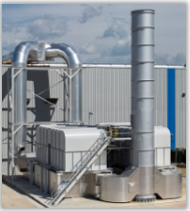
As part of the RTO implementation project, We are responsible for building a precise and comprehensive 3D model of the system. Using the specifications andtechnical inputs provided by the client and engineering teams, We digitally construct the RTO layout, ensuring accurate representation of all mechanicalcomponents Like HRC’s, CC’s, Stack, Skid, Duct, Poppets, Pipelines, Instruments and spatial relationships. This model will serve as a critical reference forfabrication, installation planning, and coordination across disciplines. The focus is on delivering a clean, efficient, and standards-compliant design that supportsseamless execution downstream
Design Requirements
- Develop a detailed 3D CAD model of the Regenerative Thermal Oxidizer based on client-provided specificationsand engineering inputs.
- Compliance with environmental regulations and performance standards.
- Interpret and translate design data (e.g., P&IDs, GA drawings, component lists) into accurate digital models.
- Ensure spatial coordination of all components including chambers, valves, ducting, and structural supports.
- Maintain modeling standards and layer discipline to support downstream engineering and fabrication workflows.
- CAE: To simulate airflow, temperature distribution, and pollutant dispersion.
- Dynamic Analysis: To assess mechanical behavior under operational loads, vibrations, and transient conditions.
Key Tools
Operating System:Windows
Tools:
- MS Office
- SolidWorks
- AutoCAD
Project Deliverables
- General Arrangement Model for Client review and approval.
- CAE simulation reports with visualizations.
- Dynamic load analysis documentation.
- Prepare model-based deliverables such as layout views, P&ID,Fabrication drawings, and BOMs as required.
Outcome / Results
- Demonstrated reductions in harmful emissions acrossdiverse industrial applications.
- Increased regulatory compliance and certification successfor customers.
- Improved operational efficiency through advanced filtrationand control systems.
- Enhanced sustainability performance and loweredenvironmental footprint.
- Strengthened customer trust through proven reliability, innovation and long-term support.
Learning & Future Scope
- Advancements in materials, sensors, and automation drive more effectiveand efficient emission control solutions.
- Evolving global standards (EPA, EU norms, ISO requirements) directlyinfluence design priorities and product roadmaps.
- Real-time monitoring and predictive maintenance enhance systemreliability and reduce downtime.