
Transition from R410A to R454BRefrigerant in Industrial HVAC System
Project Overview
The transition to R454B was driven by stricter environmental regulations and the need for lower GWP refrigerants. Redesign efforts focused on copper piping, sheet metal changes,and CAD modeling to support R454Bcompatibility. The project ensured compliance with A2L refrigerant safety standards while maintaining HVAC system performance. Updated 3Dmodels, drawings, and reports provided clear manufacturing blueprints for successful system deployment.
Design Requirements
- Copper piping routing must be recalculated to suit R454B’s thermodynamic properties, adjusting diameters and flow rates.
- Sheet metal casing and enclosures require modifications for new piping paths, ventilation, and maintenance access.
- Updated 3D CAD models reflect component integration, dimensional accuracy, and tolerance alignment across disciplines.
- Verify mounting and connection interfaces between frames, ducts, and electrical components for new configuration.
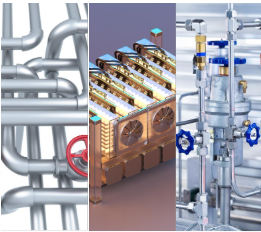
Key Tools
Operating System:Windows
Tools:
- MS Office
- SolidWorks
- Creo
- AutoCAD
Project Deliverables
- A comprehensive 3D model integrates redesigned copper piping and modified sheet metal enclosures for fabrication.
- Detailed isometric and plan drawings specify pipe sizes, flow directions, insulation, and valve placements.
- Sheet metal fabrication and flat pattern drawings guide manufacturing of modified HVAC enclosures and ducting.
- BOM lists all materials; design report documents changes, calculations, and regulatory compliance.
Outcome / Results
- The redesigned HVAC system meets A2L refrigerant safety standards, ensuring proper ventilation and leak detection.
- Utilizing updated 3D models and clash detection reduced design turnaround time by 25%, optimizing workflow.
- System modifications improved access for maintenance and leak detection, boosting operational reliability.
- Updated models produced precise fabrication drawings, minimizing manufacturing errors and rework.
Learning & Future Scope
- The validation process created a consistent framework for future projects, ensuring every preassembled model goes through standardized coordination checks.