
A global leader in the Oil and Gas Production well industry
Project Overview
Section Mill project emphasizes precision engineering, downhole tool reliability, and optimized milling performance for well abandonment and slot recovery operations.
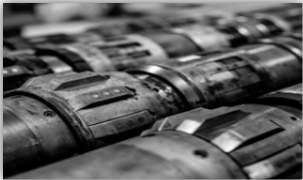
Mill is engineered for rugged downhole conditions. We focus on durability, mechanical simplicity, and cutting efficiency to ensure consistent performance in high-pressure,high-temperature wells. Each tool is dressed with bespoke carbide cutting structures, designed in-house to match specific casing materials and well geometries
Design Requirements
- Must adhere to international standards such as API, ISO, ASME, NACE, DNV.
- Ensure full compliance with environmental, safety, and emissions regulations.
- Ensure design supports maximum recovery while maintaining formation integrity.
- Use corrosion-resistant materials suitable for H₂S, CO₂, high temperature, or sour service conditions.
- Design must prioritize well control during all operational phases.
- Design must include corrosion inhibitors, coatings, and cathodic protection where needed.
- Plan for long-term well integrity and asset longevity.
- Design must enable efficient procurement and modularization where possible.
- Optimize for reduced capex/opex through standardization and repeatable design.
Key Tools
Operating System:Windows
Tools:
- MS Office
- SolidWorks
- AutoCAD
Project Deliverables
- Providing sources file like assembly 3D files, part 3D files, 2D Drawing files & PDFs.
- 3D modeling of vendor components (Purchased items)..
- To Delivered in Zip file link in One Drive.
- Calculation Reports for Section Mill.
Outcome / Results
- Consistently delivered high-productivity wells through advanced drilling technologies, precisionreservoir engineering, and data-driven optimization, resulting in increased recovery rates andreduced downtime.
- Successfully executed complex well programs in challenging environments while meeting orexceeding schedule, budget, and performance targets.
- Reduced emissions, improved energy efficiency, and supported transition initiatives throughgreener drilling technologies and cleaner production strategies.
Learning & Future Scope
- Continued mastery of directional, extended-reach, and ultra-deepwater drilling techniques.
- Deepening understanding of EOR techniques (chemical, thermal, miscible injection).
- Advanced training in well integrity management, barrier philosophy, risk assessment, and high-pressure/high-temperature environments.
- Opportunities to support geothermal wells, hydrogen storage wells, and subsurface CO₂ injection.
- Continued focus on digital and remote operations requiring new competencies across the workforce.