
Optimization of Modular HVAC Unit Design for Manufacturing Efficiency
Project Overview
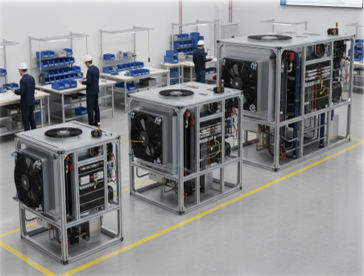
This case study focuses on the optimization of a modular HVAC unit design to improve manufacturability, reduce assembly time, and standardize common components across multiple configurations.The initiative enabled better control over production timelines and simplified coordination among design, manufacturing, and quality teams.
The HVAC unit development process initially involved multiple configurations, leading to increased design variations, higher part count, and longer assembly cycles. The goal of this project was tocreate a more modular, scalable design framework that would allow efficient reuse of standard components while maintaining flexibility for different capacity requirements.
Design Requirements
- Develop a standardized frame design compatible with various model sizes.
- Ensure the design supports easy customization for client-specific airflow and layout needs.
- Achieve dimensional consistency to minimize fitment issues during fabrication.
- Maintain structural rigidity and compliance with mechanical and safety standards.
- Integrate design for manufacturability (DFM) principles to reduce production errors.
- Ensure accessibility for maintenance and inspection.
Key Tools
Operating System:Windows
Tools:
- MS Office
- SolidWorks
- Creo
- AutoCAD
Project Deliverables
- A modular frame model adaptable across product ranges.
- A revised Bill of Materials (BOM) with 15% reduction in unique part numbers.
- Updated 2D drawings and 3D templates for future design reuse..
- A defined checklist for manufacturability review before production release.
Outcome / Results
- Achieved a 20% reduction in design turnaround time due to the standardization.
- Reduced manufacturing lead time through improved standardization.
- Minimized rework by ensuring alignment between design and production drawings.
Learning & Future Scope
- The project highlighted the importance of continuous standardization and early coordination with manufacturing.
- The modular framework developed can now be extended to other system components in future.